The vast majority of our resources (including the ones featured here) can also be found can be found on our forum and archive site, Smartermarx.com. Membership for the site is free, and we always look forward to new creatives joining our ever-growing community.

The companion resource, Smartermarx Magazine, is a digital periodical is aimed at everyone from the hard-working creative to the passionate art lover. It was born out of the lively exchanges of the Waichulis Biweekly Artist Roundtables, the Roundtable Newsletters, the ÀNI Art Academies newsletters, and the wealth of ideas shared in our Smartermarx archive and forum. More than just a newsletter, this resource is intended as a community hub—a place where artists, art-lovers, lifelong learners, and the many creatives of the ÀNI network can connect, celebrate, and grow together.
Rooted in the ÀNI Art Academies—a global family of educational institutions founded to provide exceptional training in visual art—this publication reflects the same commitment to skill, curiosity, and creative exchange that defines ÀNI’s educational mission. Yet, while its origins lie in the ÀNI Academies, we hope that its reach extends far beyond. This is an open space for anyone who values the pursuit of mastery and the joy of artistic discovery, regardless of background or affiliation. With academies and partners spanning multiple continents, ÀNI has long celebrated the power of connection through art. This publication continues that mission by giving voice to artists, teachers, and enthusiasts across the world—offering a shared platform for reflection, learning, and inspiration.
The magazine is the brainchild of Ava-Ash Waichulis (Editor), Anya Dribas (Creative Director), and Anthony Waichulis (Resident Tech Wrangler, usually tinkering with the gears behind the scenes). Their vision: a periodical that is equal parts community, resource, celebration, and conversation starter. Each issue is anchored by one of ÀNI’s Core Values—from perseverance and compassion to integrity, diversity, and community impact—values that shape not only how we teach, but how we connect, create, and contribute to the world around us.

PAPERS
“What Does Realistic Look Like?” 2018, (version 1.2) 52 pgs. (edits 4-6-2018)
Due to the nature of my work, I am often asked, “How do you get your paintings to look so realistic?” It’s a great question in the sense that it usually opens the door to an enjoyable conversation about art, visual perception, and a host of related topics that I find utterly fascinating. However, much of that ensuing conversation is determined by how the inquirer responds to a question that I pose in response to theirs, “What does realistic look like?”
Intended for visual artists, this treatise offers what I hope is an engaging exploration of what “realistic” truly means in terms of visual perception and communication.
Download the full PDF here: “What does realistic look like?”
You may notice that I have added a version descriptor here in the event that I update the text. If you notice any errors or would like to provide feedback on this resource, please feel free to contact me at: yychuls@gmail.com
A Primer on Pictorial Composition (I-VII) 2016, 215 pgs.
“Any path to effective visual communication must begin with the one factor that determines our ability to elicit meaning from visual stimuli, allows for our experience of aesthetic quality, and facilitates successful communication–our biology. A Primer on Pictorial Composition is a seven-part walk-through of the many exciting and insightful contributions from modern vision science, empirical aesthetics, neuroaesthetics, cognitive psychology, and evolutionary psychology that can augment or replace many of the long-standing heuristics that continue to guide contemporary compositional efforts.” Download the full PDF here: a-primer-on-pictorial-composition-_anthony-waichulis
Pictorial Composition Consideration Map (PDF)
CURRICULA
Visual Language Core (Part I-Section A & B) and (Part II) 2018, 357 pgs.
Select content from several contemporary curricula, including the Waichulis Language of Drawing, Language of Painting, and Visual Language Programs. This content may be shared freely so that any aspiring or seasoned creatives may benefit from the information herein.
If you notice any errors or have recommended changes to improve the quality of this content, please contact designer Anya Dribas at: aaaw.anyadrs@gmail.com or Anthony Waichulis at: yychuls@gmail.com
BE SURE TO DOWNLOAD BOTH SECTIONS of Part I.
VISUAL LANGUAGE CORE PART I Section A
VISUAL LANGUAGE CORE PART I Section B
VISUAL LANGUAGE I, II, and III (Designed for Grades K-12) (Based on the Visual Language Core)
Our Visual Language program is a strategic sequencing of educational visual arts exercises designed to develop visual literacy and communication skills in the most effective and efficient manner possible. Echoing the same rational sequence of skill-building exercises from our core curriculum (in use with the International Ani Art Academies project), Visual Language I, II, and III seeks to develop visual literacy and communication skills that will prepare K-12 students to successfully interact and contribute to a global environment that is increasingly dependent on visual stimuli.
This Visual Language Program:
VISUAL LANGUAGE I – Lesson plans for Grades K-3
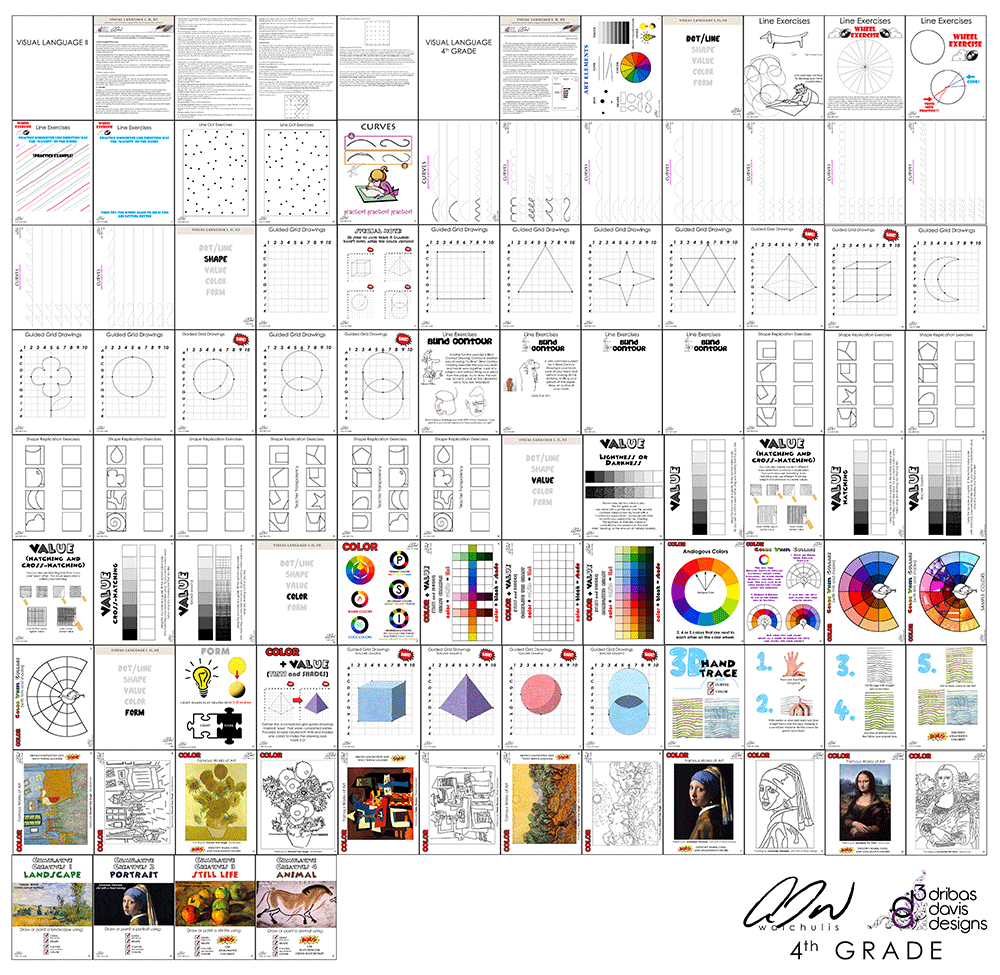
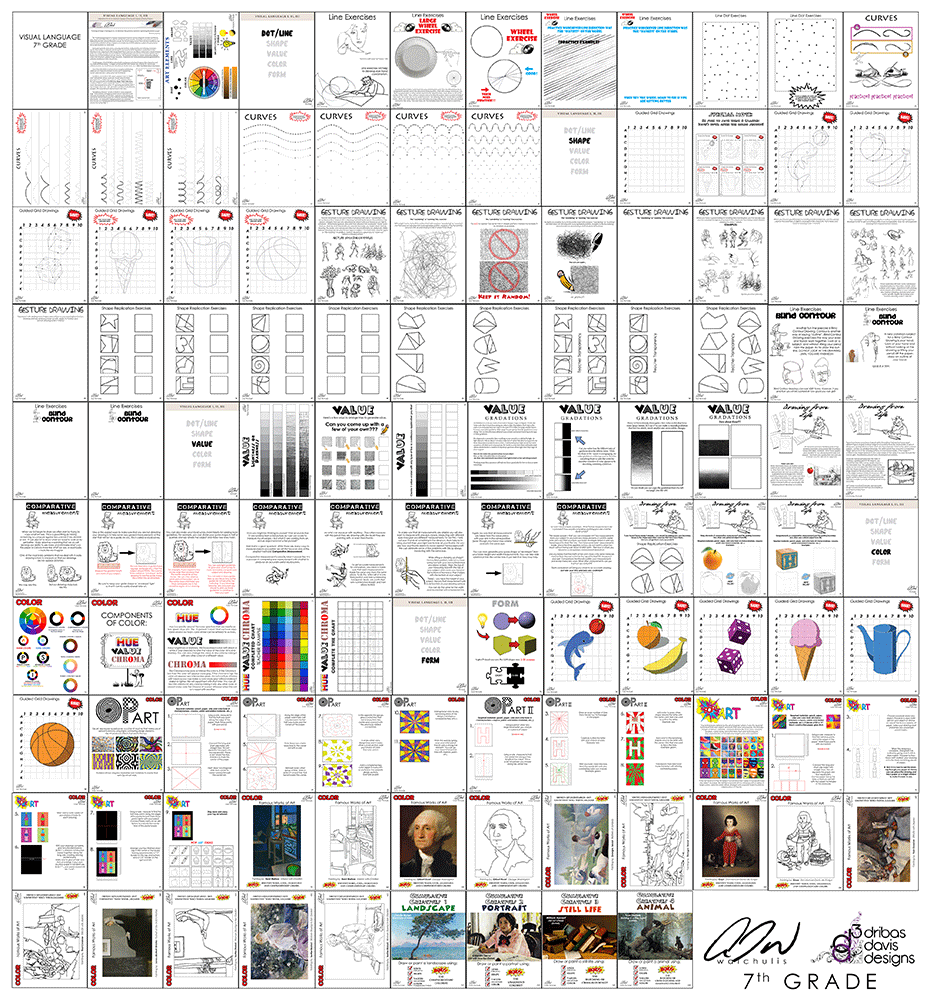
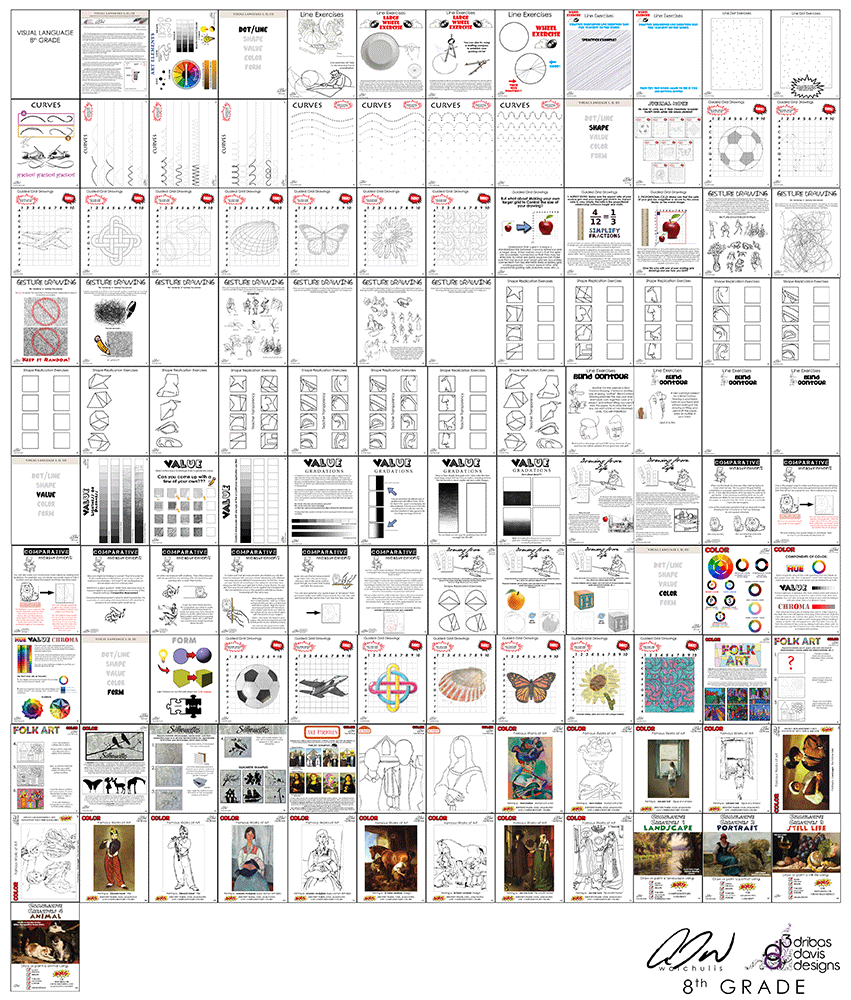
VISUAL LANGUAGE II – Lesson plans for Grades 4-8
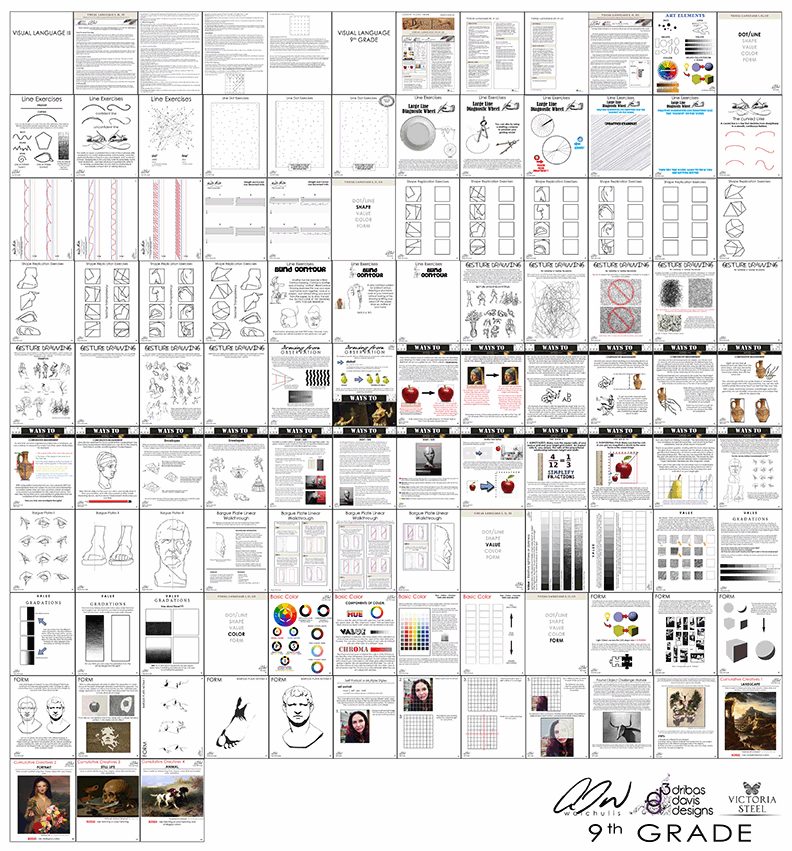
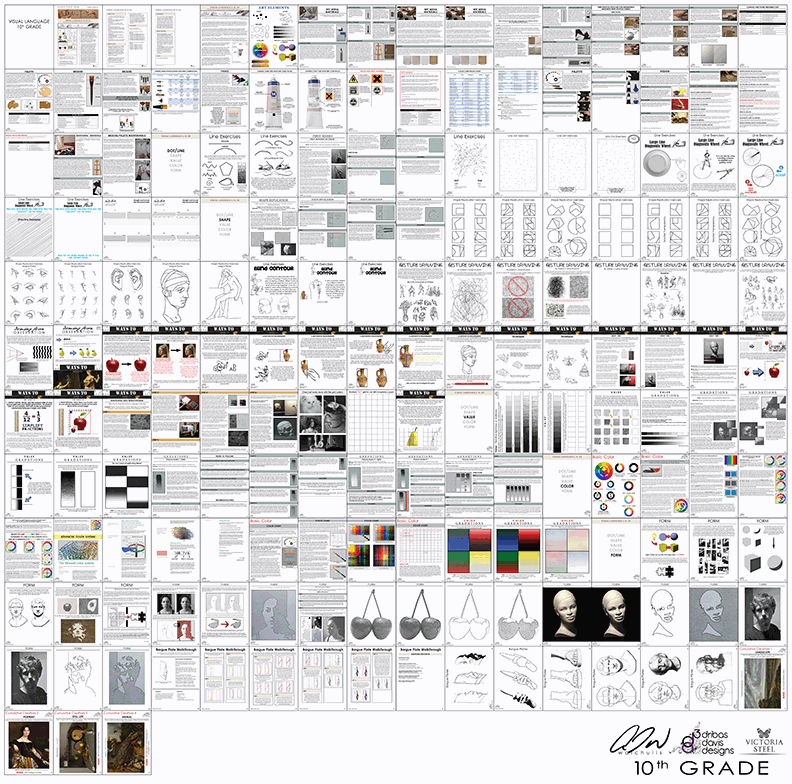
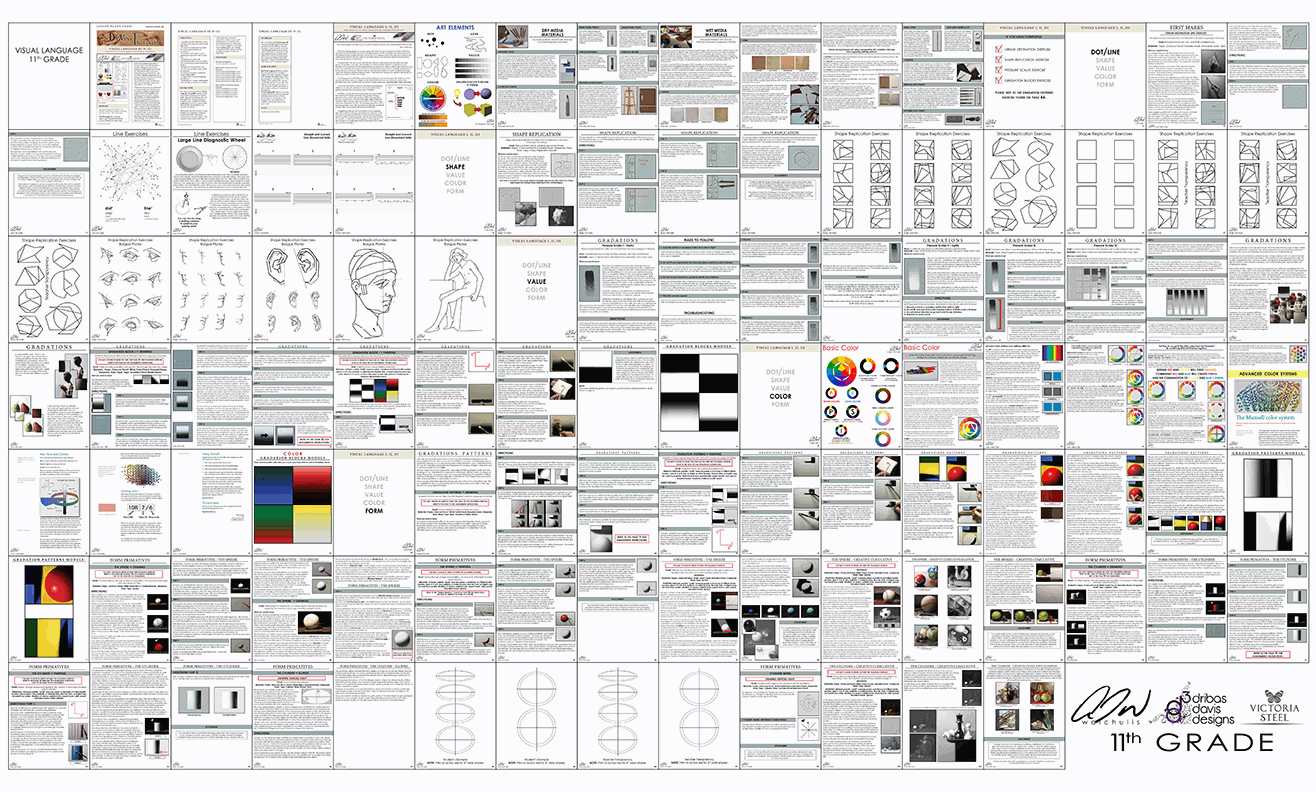
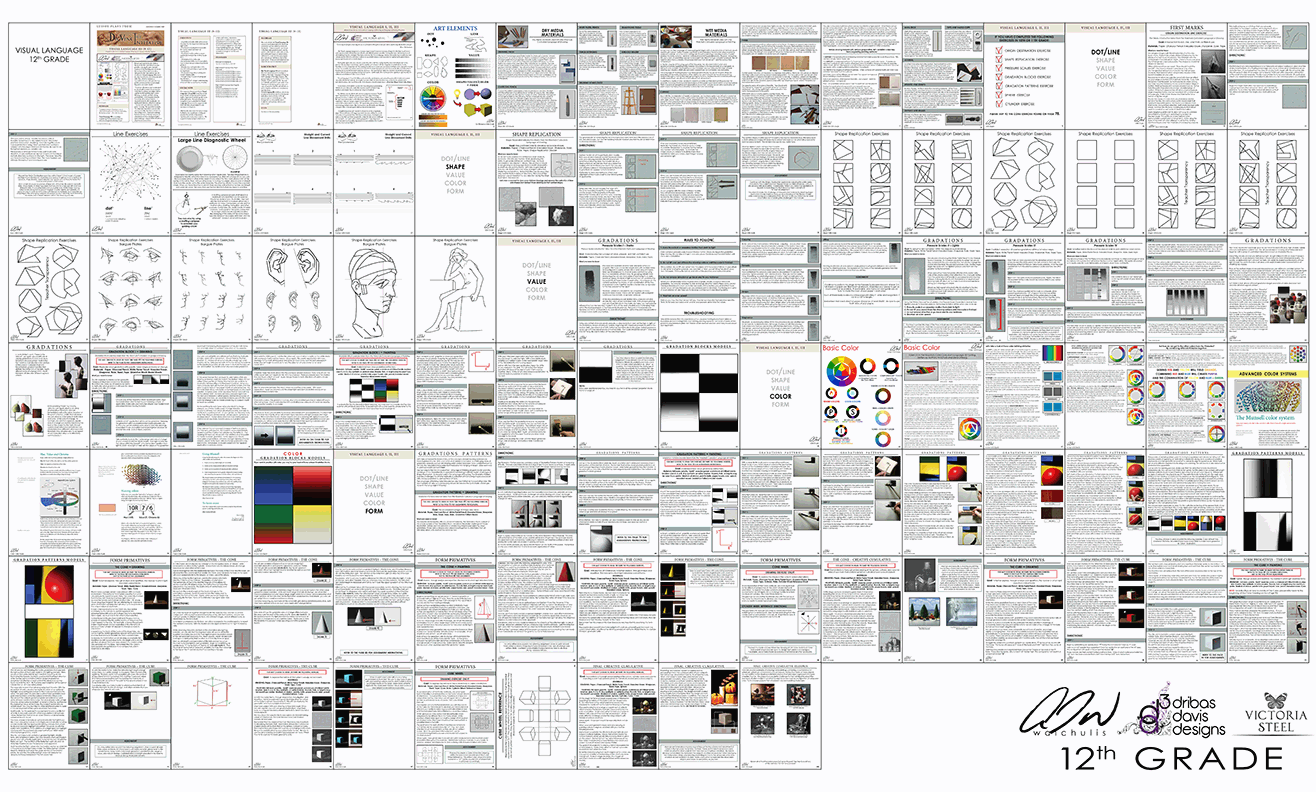
VISUAL LANGUAGE III – Lesson plans for Grades 9-12
For K-8 teachers with limited or no color printing resources, we have achromatic (black and white) versions of many of the pages, which can be found here: Visual-Language_K-8_Achromatic-Substitutes.zip and Visual-Language_9-12_Achromatic-Substitutes.zip
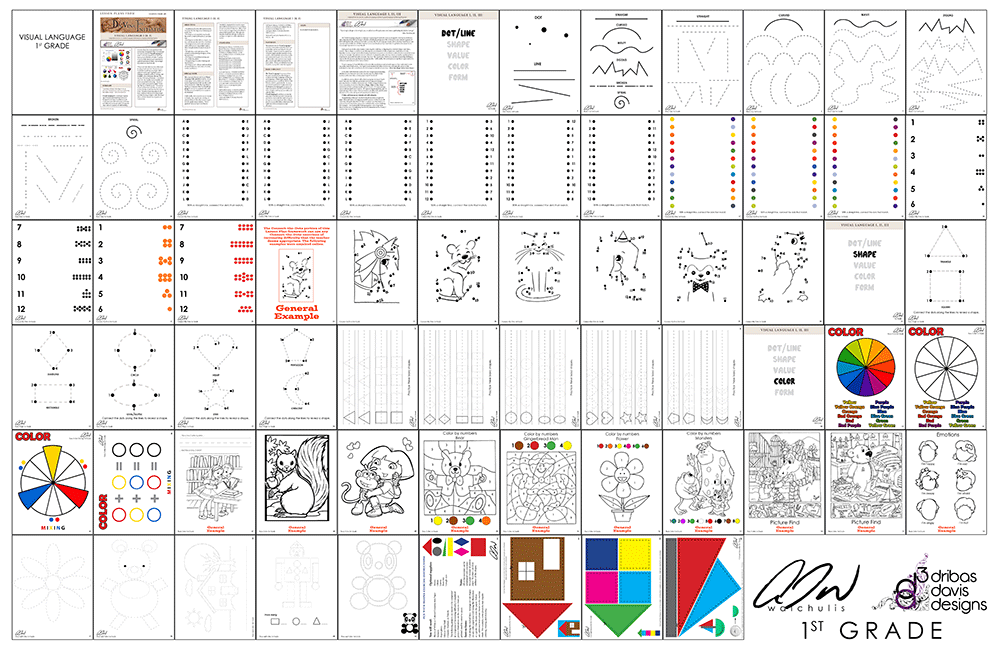
Visual Language I (K-3) POSTER PREVIEWS: Click on images for a preview

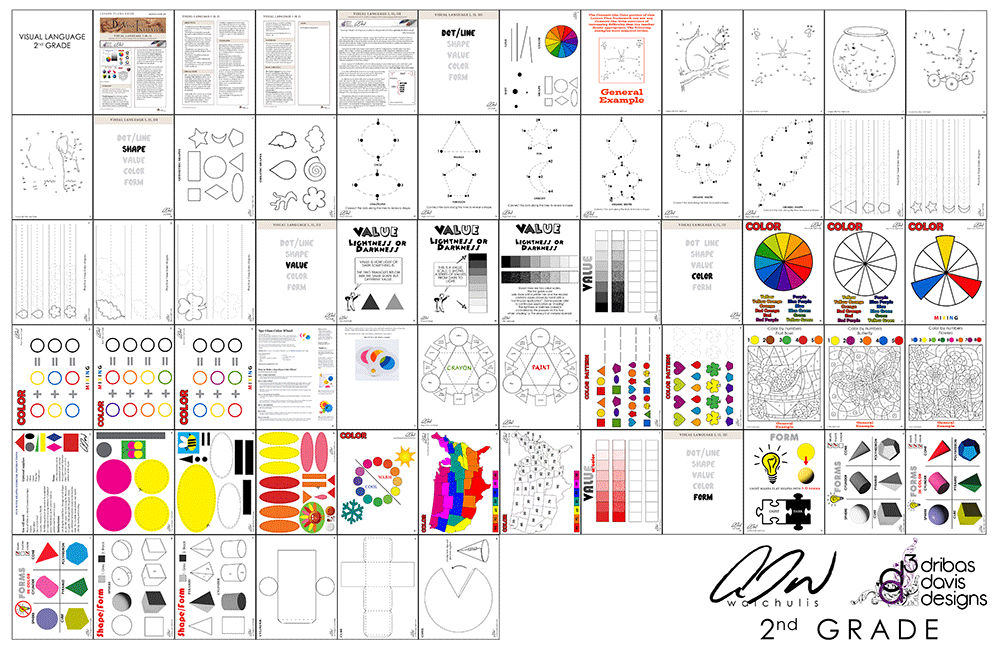
Visual Language II (4-8) POSTER PREVIEWS: Click on images for a preview


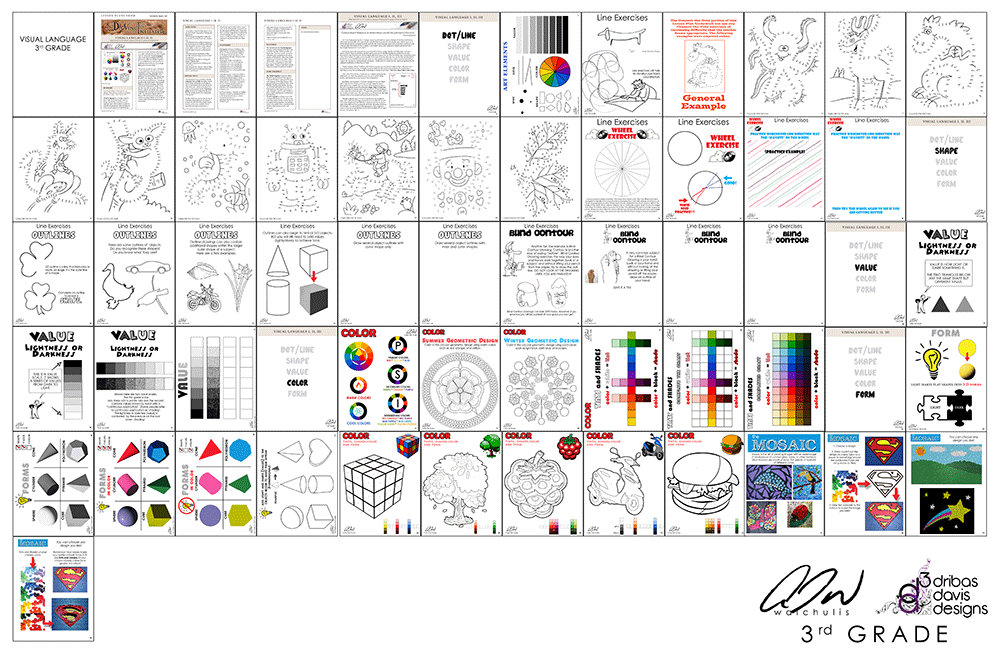
Visual Language III (9-12) POSTER PREVIEWS: Click on images for a preview