When Accuracy Becomes the Wrong Target: Goodhart’s Law and the Art of Learning
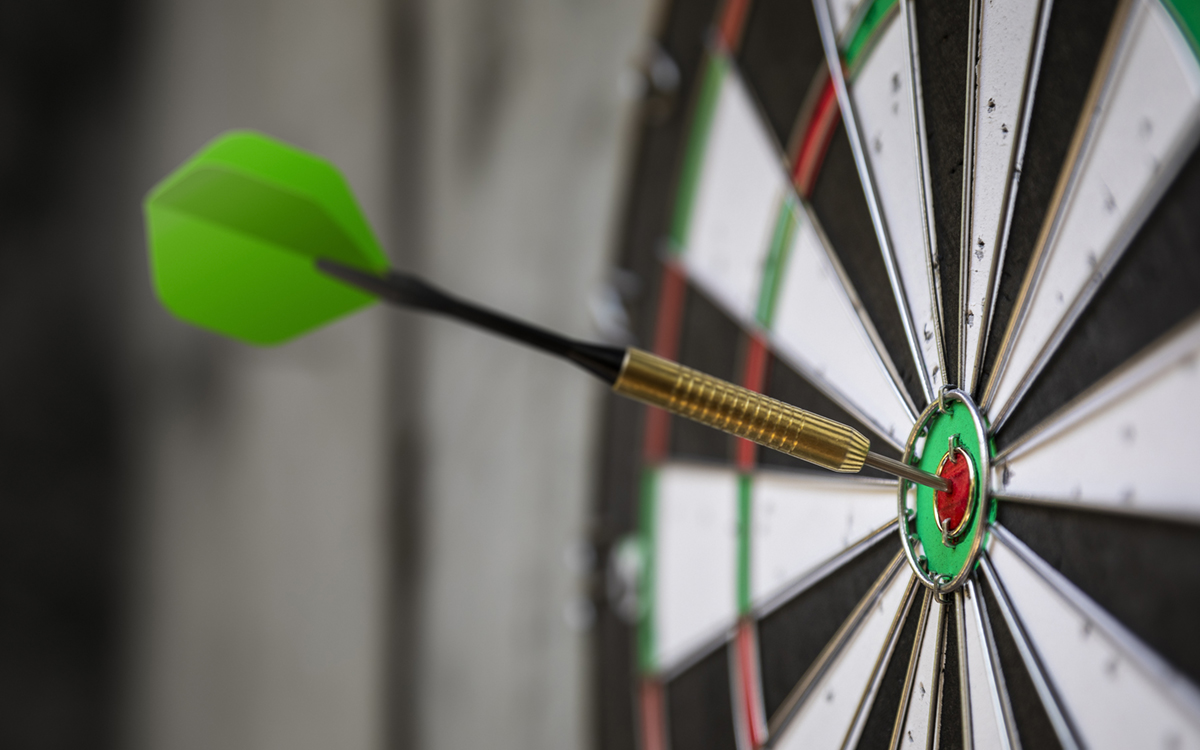
How training can produce increasingly impressive performance while producing progressively less of the learning it was designed to create. (Written for Smartermarx Magazine Sept. 2026) A Sad Tale of Tails In 1902, French colonial authorities in Hanoi (capital city of Vietnam) faced a substantial rat problem. The issue became particularly concerning amid Hanoi’s modernization efforts,… Continue reading →

Toward a Theory of Canonical Illumination

As students graduate and new students enter the studio, I find my mind doing a kind of metaphorical “lazy loading,” quietly preparing answers to the recurring questions that tend to surface in the first few months. One of those questions concerns the illumination “home” position we use for the form box and isolated form studies:… Continue reading →

The Cognitive Forest

Navigating the landscape of learning, where multiple routes can deepen rather than dilute understanding. A Clearing In the foyer of the ÀNI Art Academies Waichulis, there is a poster that I am quite fond of, titled “Navigating the Learning Process.” It illustrates mechanisms of learning within two broad categories: those often associated with rote learning… Continue reading →

Medium, Solvent, Diluent, and Binder in Painting: Definitions, Etymology, Material Roles, and Historical Usage

Why “Medium” Is So Often Confusing Few terms in painting are used with greater broad-stroke ambiguity than “medium“. In common art-related conversations, some may use the word to refer to the binder in a paint system, a liquid additive mixed into a paint system, a solvent-rich thinning mixture, or even the entire material category in… Continue reading →

Why RYB Still Belongs in the Classroom (and Studio!)

RYB and the Question of Pedagogical Validity It’s been a while since I’ve publicly addressed the utility of the RYB (red–yellow–blue) color model. A recent conversation on social media, however, prompted me to revisit the issue, not only for its utility as a powerful heuristic in early education, but also as a valuable tool for… Continue reading →

You Can’t Fake You: The Impossibility of Inauthentic Art

Featured Image: Satire on Art Criticism Rembrandt (Rembrandt van Rijn) Dutch, 1644 “The most prized attribute of contemporary art is no longer beauty, but authenticity.”— Sarah Thornton, Seven Days in the Art World (2008) “Authenticity has become the contemporary version of the soul.”— Andrew Potter, The Authenticity Hoax (2010) In the art world, “authenticity” is… Continue reading →

Chimera in Visual Art: Perceptual Cues, Prediction Models, and the Inference of Error

The following is based on the presentation given at the 2025 IX Arts convention. Humans form an initial visual interpretation almost immediately upon seeing an image. The “gist” of a scene can be extracted in under 100 milliseconds, with above-chance identification possible in as little as 13 milliseconds (about 1/75th of a second). By approximately… Continue reading →