Anchors Down!

Let’s consider luminance (A stimulus that most representational artists would record with value.) “Luminance is an objective measurement of the overall intensity of a stimulus expressed in candelas/m2 (photometers used for this purpose measure radiant energy with a filter that mimics the sensitivity of the average human observer, thus specifically measuring light). The resulting sensations… Continue reading

Thoughts on Perception for the Representational Artist.

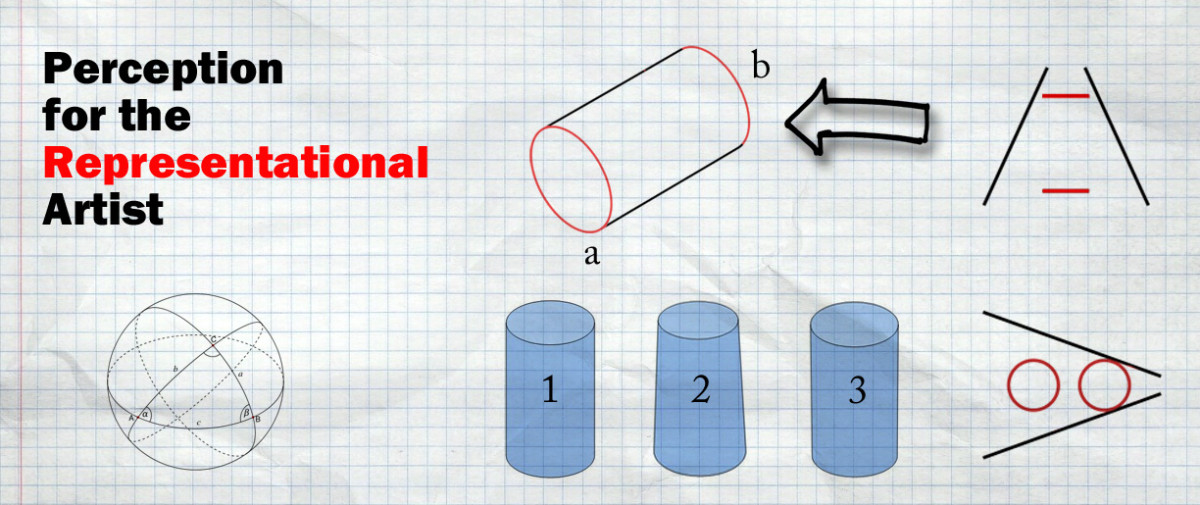
Let’s look at one problem that seems to arise quite often regarding basic form study and perception: The cylinder is one of the most basic geometric solids that is often systematically studied in drawing or painting programs. The cylinder is a bit challenging for the uninitiated draftsman as both the shape and form appear to… Continue reading

Don’t Sweat the Details

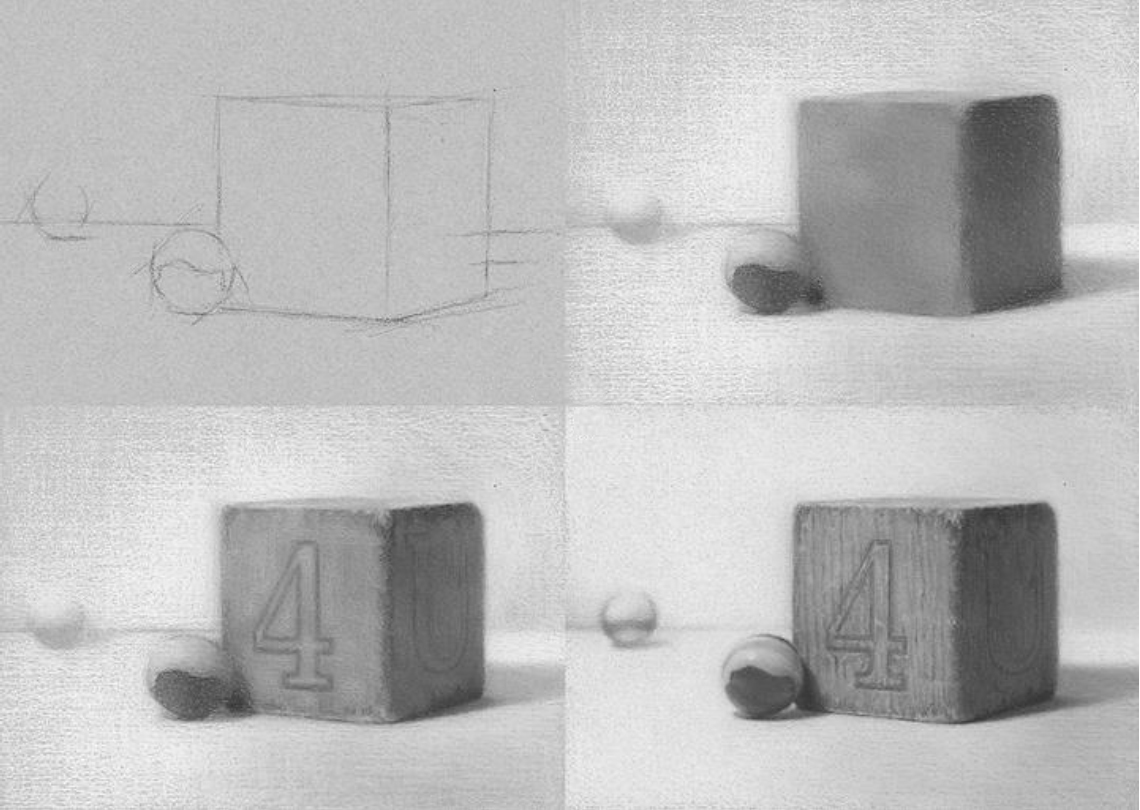
4 Great Tips for a Successful Approach to Surface Details A confident and successful approach to detail begins with an ability to simplify at the onset of a drawing or painting endeavor. Uncertainty about details or surface characteristics can easily lead to works that appear unresolved or unfinished. With only a few key steps, you… Continue reading

Considering Line

I have always found far greater success in capturing faithful representations of nature by utilizing methods that echo the manner in which nature communicates the objects visually. One of the ways I often do this is by lessening the emphasis on delineated representations early in my process. This is not to say that I do… Continue reading

Experts and Authorities

Defining an Expert Let’s look at how the terms are defined: An expert can be defined simply as a person who has a comprehensive knowledge of, or skill in, a particular area. However looking to the etymology of the word we find an emphasis on ‘experience’: Late 14c., “having had experience; skillful,” from Old French… Continue reading